

“Start a life again no regrets”
If you’re planning to play the Like a Dragon series in numerical order now that it’s available across all platforms, the first title powered by the Dragon Engine you’ll encounter won’t be Like a Dragon 6: The Song of Life—the franchise’s inaugural Dragon Engine entry—but rather the chronologically earlier Like a Dragon: Kiwami 2—despite the latter releasing a full year after Yakuza 6.
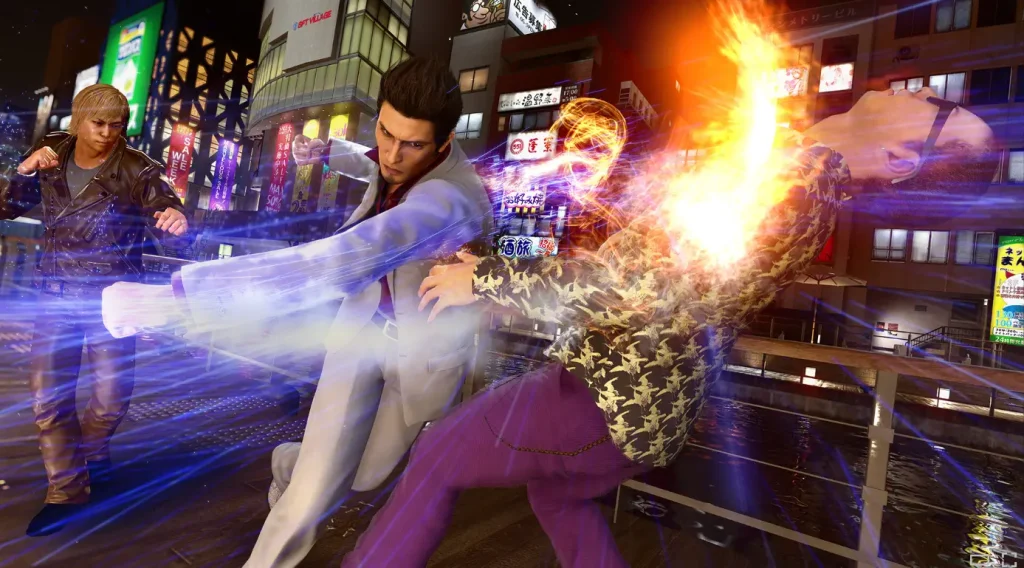
This quirk ensures that every new fan diving into the series in sequence will be in for a pleasant surprise when they boot up Like a Dragon: Kiwami 2 for the first time.
The cataclysmic events that claimed his adoptive father, sworn brothers, and beloved woman have faded into the past. Now, players step into the shoes of Kazuma Kiryu to embark on a brand-new journey through Kamurocho and Sotenbori—worlds rendered with drastically improved texture resolutions and polygon counts (no spoilers here, given how much time has passed). For both Kiryu and the player alike, this fresh start is a welcome reprieve.
Returning to the glitzy, neon-drenched streets of Kamurocho, you’ll quickly notice the sweeping transformations brought by the reconstruction of Millennium Tower. Pedestrians boast more varied appearances; storefronts lining the streets can be entered (and even ransacked) with a simple push of a door; vehicles trundle slowly along Shichifuku Street. Every detail signals that the Like a Dragon IP has stepped into an unprecedented new era.
Admittedly, this all might sound like old news in 2025. Yet, a significant portion of Switch 2 players of Like a Dragon: Kiwami 2 are newcomers who got their start with the Switch version of Like a Dragon: Kiwami and Like a Dragon 0: The Place of Oaths released just a few months ago. If you’ve already become enamored with the “absurdist realism” that defines the Like a Dragon experience through those two titles, then Like a Dragon: Kiwami 2 is the perfect gateway to the “modern Like a Dragon” era powered by the Dragon Engine.
In fact, the Switch 2 port of Like a Dragon: Kiwami 2 delivers performance roughly on par with its original PlayStation 4 release. While the game suffers from a litany of issues—frame rate drops, lengthy loading times, and broken depth-of-field effects in cutscenes—these flaws are easy to overlook when you consider the sheer convenience of playing a Dragon Engine Like a Dragon title on the go for over two hours straight on a single charge.
What’s more, Like a Dragon: Kiwami 2’s arrival on Switch 2 bodes well for the rest of the Dragon Engine-powered mainline and spin-off titles. With a bit more effort from Ryu Ga Gotoku Studio, it’s only a matter of time before they make their way to the platform. While this might be a touch optimistic, this hopeful outlook undeniably adds an extra layer of appeal to the game.
Unfortunately, strip away the Switch 2 port’s novelty and future promise, and Like a Dragon: Kiwami 2 as a standalone game doesn’t hold up quite as well.
The game’s biggest shortcomings lie in its combat system.
As mentioned earlier, Like a Dragon: Kiwami 2 launched a year after Like a Dragon 6: The Song of Life, making it Ryu Ga Gotoku Studio’s second Dragon Engine title. Counterintuitively, however, the developers chose not to build on the real-time combat mechanics refined in Yakuza 6—instead, they completely overhauled the system from the ground up.
Typically, such a drastic overhaul is reserved for cases where a previous game’s mechanics were widely panned. But Like a Dragon 6, despite its divisive storyline, earned widespread praise for its combat system, which masterfully blended the series’ signature street brawl flair with the Dragon Engine’s smooth, responsive controls—it was one of the game’s few universally acclaimed strengths. Like a Dragon: Kiwami 2’s decision to abandon these proven mechanics is not only puzzling but also a misstep.
Specifically, the most glaring flaw of Like a Dragon: Kiwami 2’s combat is the removal of two key features from Yakuza 6: chargeable heavy attacks in combo strings (C-attacks) and the late-game essential guard-breaking technique, Shattering Essence. In their place, the game introduces chargeable light and heavy attacks that can break guards right from the start. As a result, the combat’s technical depth—if you can call it that—shifts from Yakuza 6’s focus on precise timing for combo inputs to a tedious game of maintaining charge with the “C-button” during light attack strings, then unleashing the charged heavy attack the moment an enemy blocks to interrupt their counterattack and sustain damage output.
Although Like a Dragon: Kiwami 2 introduces an all-new Dragon Engine combat moveset for Kazuma Kiryu, the enemy AI remains unchanged from Yakuza 6—foes still quickly raise their guards after taking damage. In Yakuza 6, this AI behavior was the perfect foil for Shattering Essence, but with that technique and C-attack charges removed, the combat feels disjointed and frustrating.
Without charging attacks, enemies block so rapidly that you can’t even land a full basic combo. Charge your attacks, and you risk triggering the game’s aggressive read-the-player mechanics, leading to wasted charges and punishing counterattacks. Beyond basic offense and defense, the combat system offers little room for creative play. This frustration eventually pushes players toward a mind-numbingly rigid, turn-based-like strategy: three light attacks followed by a block, charging during the block animation. At times, it even feels like a premature preview of the turn-based combat that would define later mainline entries like Like a Dragon 7: Whereabouts of Light and Darkness.
To make matters worse, the game’s early-game skill progression curve is notoriously uneven, forcing players to rely heavily on Rainbow Buns—items that boost experience gain—to keep up. But compared to the clunky combat experience, this is a minor gripe.
Frankly, it’s baffling why Ryu Ga Gotoku Studio chose to discard the Dragon Engine combat system they’d perfected in Yakuza 6. Perhaps Yakuza 6 failed to expand the franchise’s fanbase, prompting the team to revert to a more formulaic, by-the-numbers combat design. Whatever the reason, the experiment clearly didn’t pay off—otherwise, Like a Dragon 7’s radical shift to turn-based combat never would have happened.
Regardless, time marches on, and these failed attempts to court new players are hardly worth dwelling on today. The transition from the Kiwami Engine to the Dragon Engine transformed the Like a Dragon series in countless ways—and there’s no turning back.
The Kiwami Engine era was defined by a distinct craftsmanship. The developers approached game design with a passion for experimentation, cramming in as much playable content as possible to make each title as engaging as it could be. In the Dragon Engine era, however, “realism” takes precedence over everything else on the surface, while behind the scenes, the development philosophy has shifted to “reusing existing assets to boost efficiency.” This shift is palpable when comparing the numerous similarities between Yakuza 6 and Like a Dragon: Kiwami 2.
If the Kiwami Engine era embodied the spirit of a dedicated craftsman—bold, experimental, and driven by a pure love of game-making—the arrival of the Dragon Engine and its streamlined industrial pipeline shattered that spirit entirely.
Yet, the Dragon Engine also brought with it larger production values and global mainstream success for the Like a Dragon IP. For all its flaws, Like a Dragon: Kiwami 2 remains an indispensable chapter in this transformative journey.
Beyond its merits as a game, Like a Dragon: Kiwami 2 holds a special place in my heart. Back when I was a college student surviving on a laptop, the bottle of Ballantine’s 17 on the bar counter during Kiryu’s conversation with Shinji Date, and the glimmering night view of the Sotenbori river in the rain—these small details sparked vivid fantasies about the colorful life that awaited me as an adult.
Years later, I landed my first job and earned my own money. I’ve ordered a neat Ballantine’s with a large ice sphere at a bar, and I’ve stood in Osaka, gazing at the dazzling night lights of Dotonbori. The specifics of those moments have faded from memory, but in their place, I can almost hear the lyrics of Shonan No Kaze echoing in my mind:Yearning for the golden fish that soars through the sky, dancing like a dragon.
So yes, I’ll definitely see Like a Dragon: Kiwami 2 through to the end.








暂无评论内容